Why a Paver Patio Beats a Concrete Slab Every Time
A plain concrete slab is one of those things that seems fine until it isn't. One hard freeze-thaw cycle, and you've got a crack running right through the middle of your outdoor space. Once that happens, you're either staring at it every time you step outside or paying to tear the whole thing out. Pavers are just built differently.
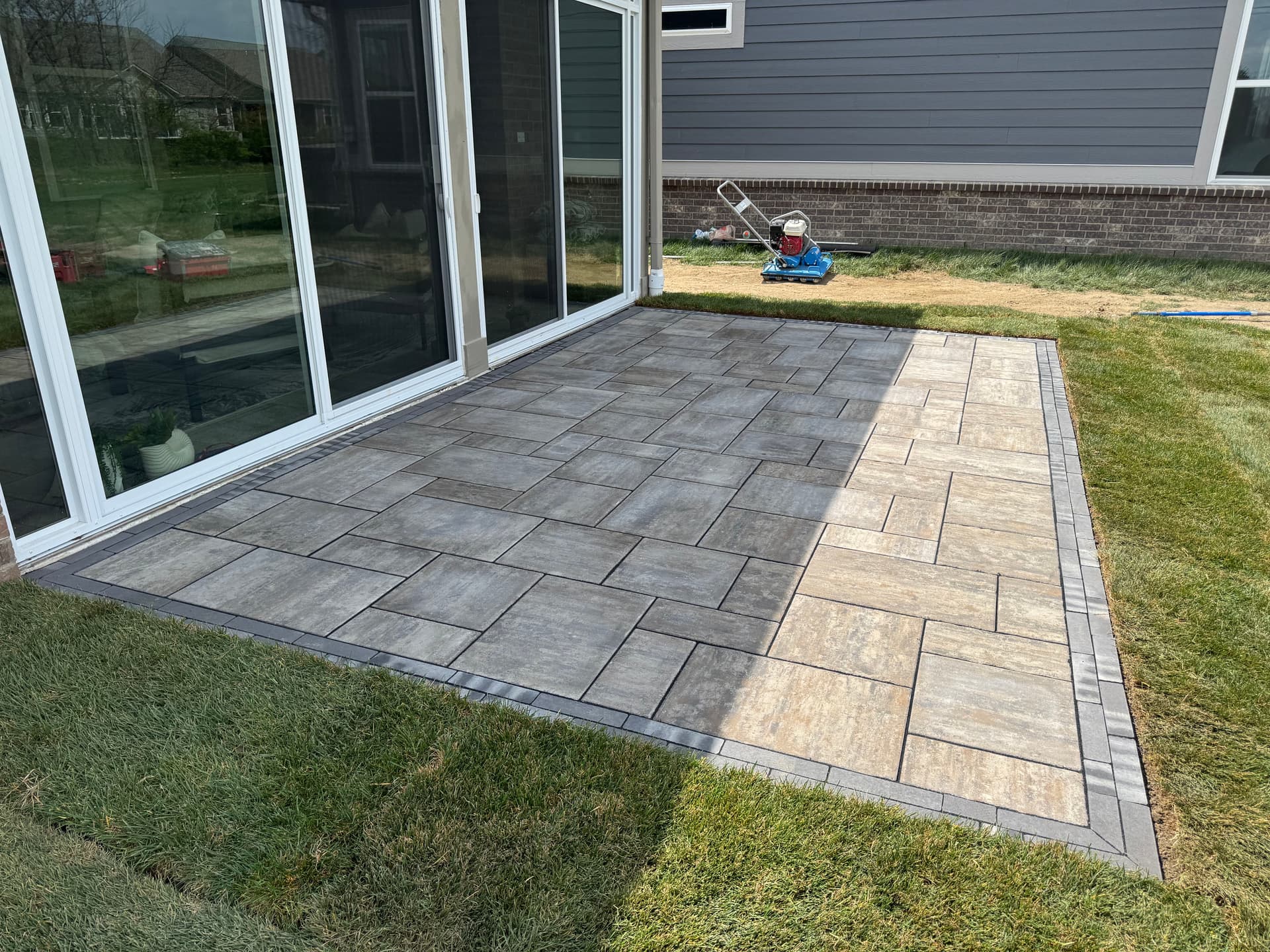
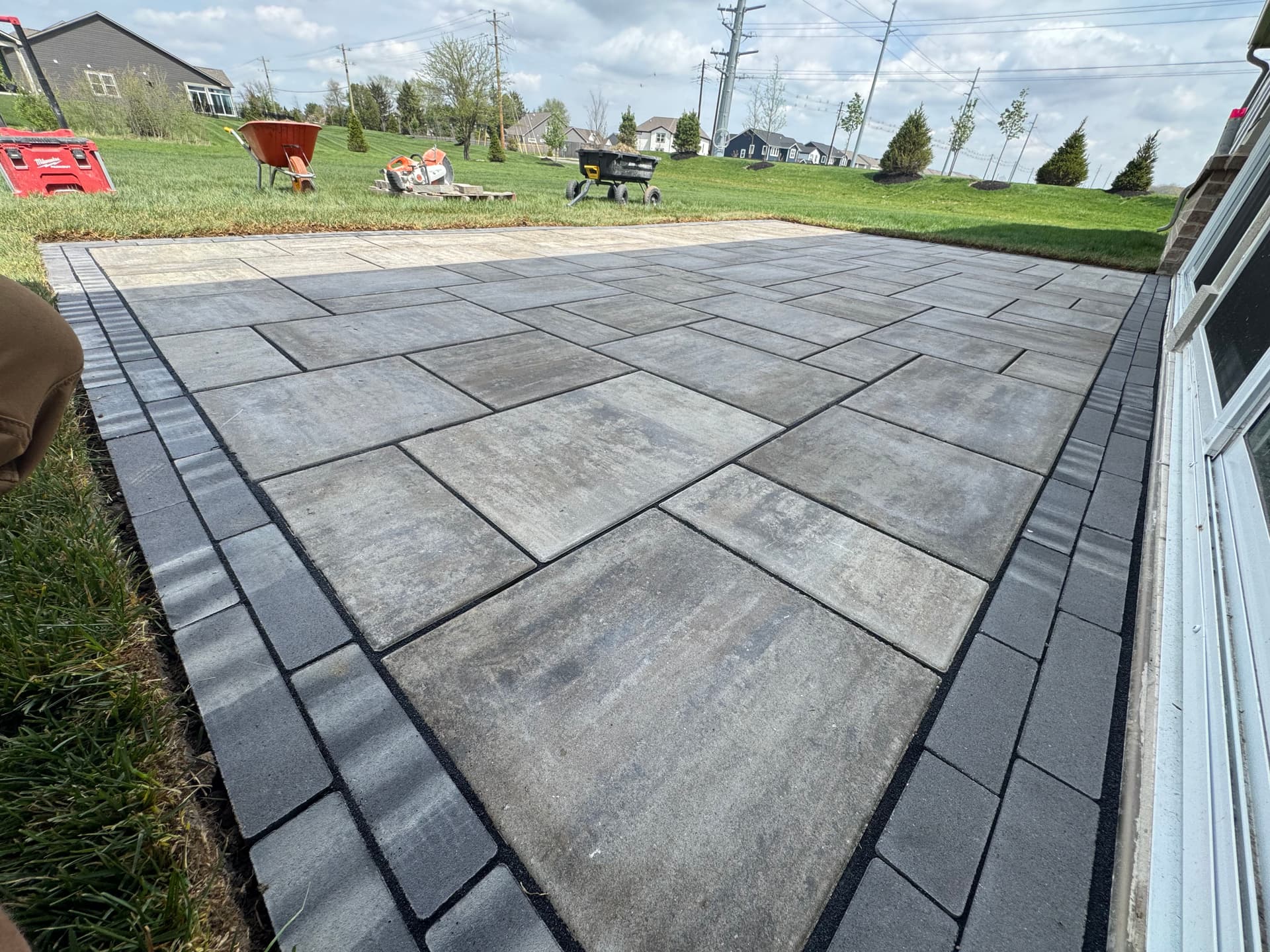
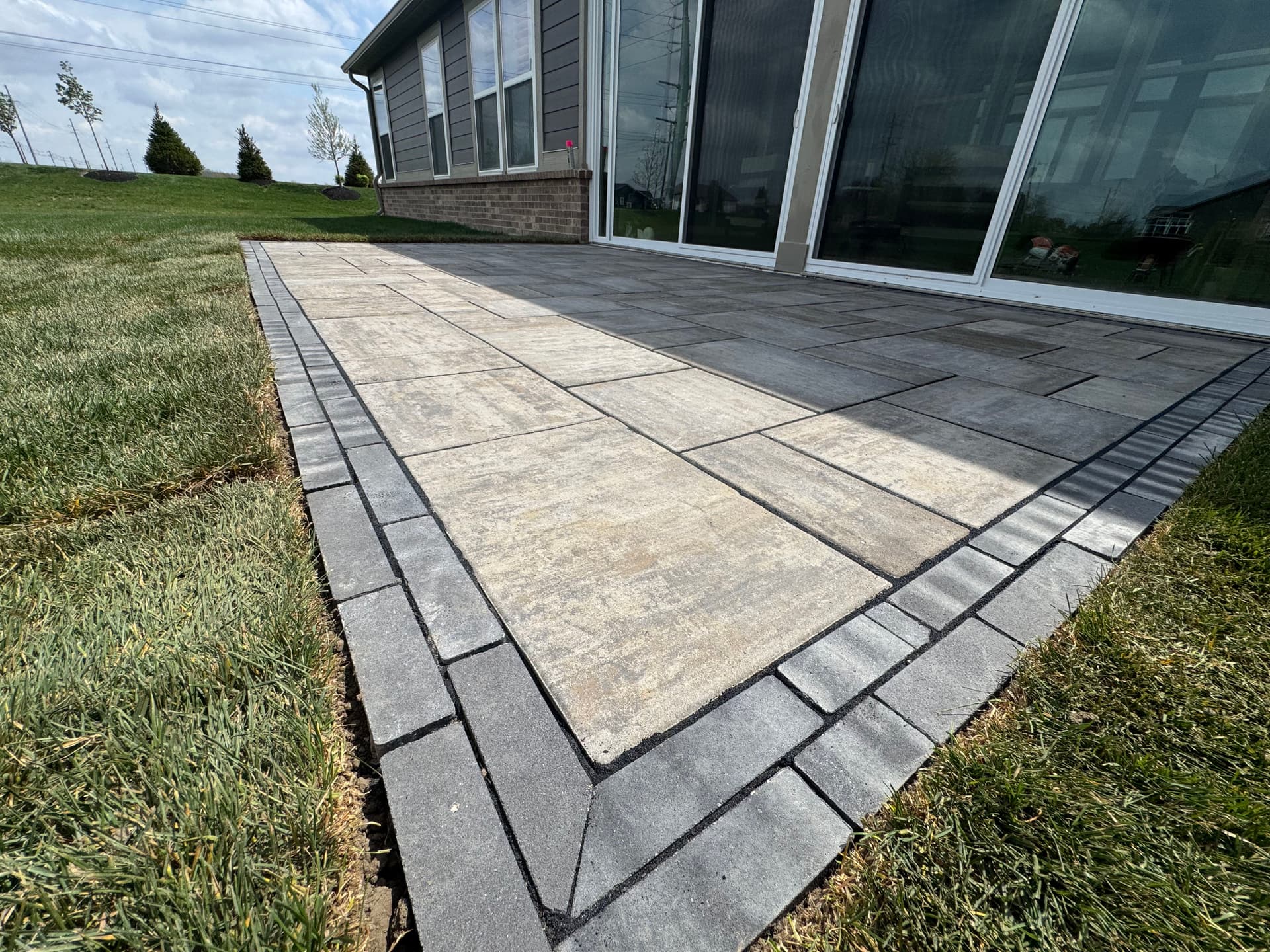
Here's what we love about this type of install - the design flexibility and the durability work together. We ran large-format field pavers in a running bond pattern and framed the whole thing with a double border using smaller tumbled pavers in a contrasting tone. That border does two things: it locks the field pavers in place structurally, and it gives the finished surface a clean, intentional look that a plain slab just can't offer.
The practical side matters too. If a single paver ever shifts, settles, or cracks, you pull that piece and replace it. That's it. No saw cutting, no patching, no color mismatch across a big slab repair. The individual units are the feature - and they're also the fix. It's one of the biggest long-term advantages of going with pavers over poured concrete.
What makes a paver patio actually work comes down to what's underneath it. Proper base prep, compaction, and edge restraint are what keep everything level and locked in over time. Cut corners on the base, and even the nicest pavers will shift on you. We use a plate compactor throughout the process to make sure the base is solid before a single paver goes down.
If you've been putting off the backyard because you weren't sure it was worth the investment - it is. A well-built paver patio adds usable square footage to your home and holds up for decades with almost no maintenance. It's the kind of hardscaping work that pays for itself in how much you'll actually use the space.