Stone Garden Bed Wall Keeps Mulch Where It Belongs
If you've dealt with mulch washing out every time it rains, you know how frustrating it gets. You re-mulch, it looks great for a week, then the next storm scatters everything across the lawn. It's a cycle that wastes money and makes your yard look rough.
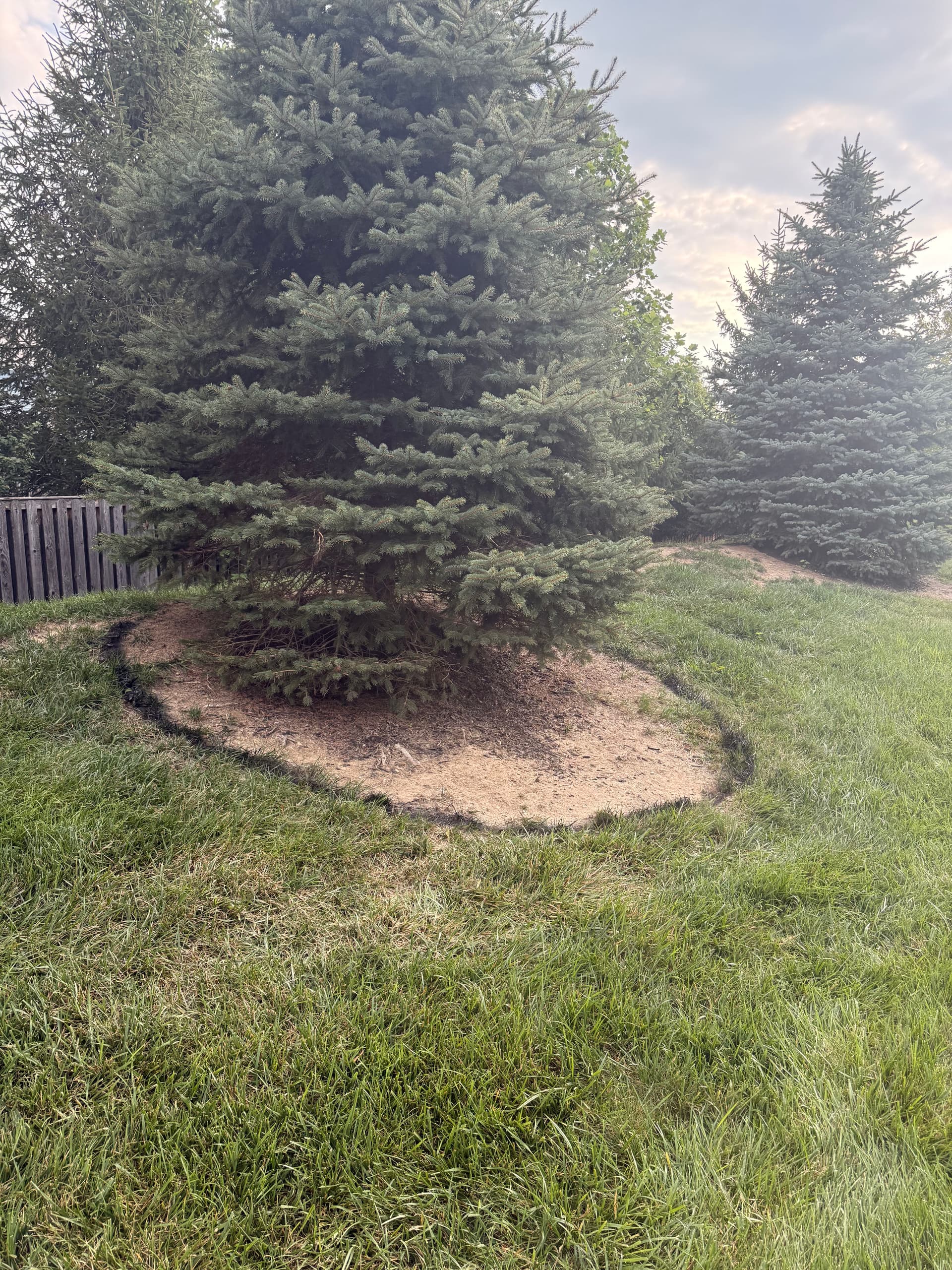
Here's what we were working with - a bare, undefined bed around a spruce tree. No edging, no border, nothing holding the soil or mulch in place. The bed had lost its shape and honestly just blended into the surrounding lawn in the worst way. A clean fix was overdue.
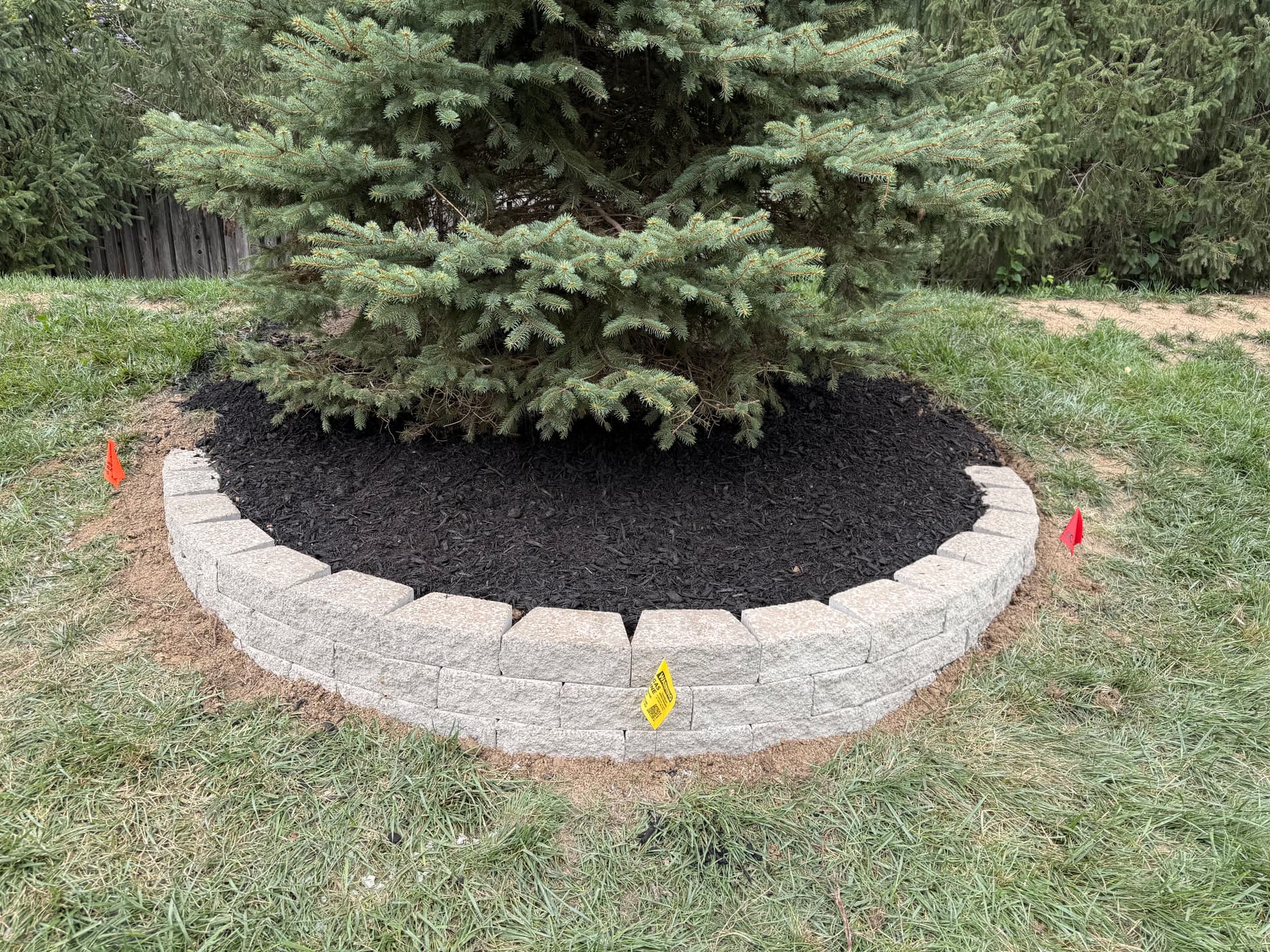
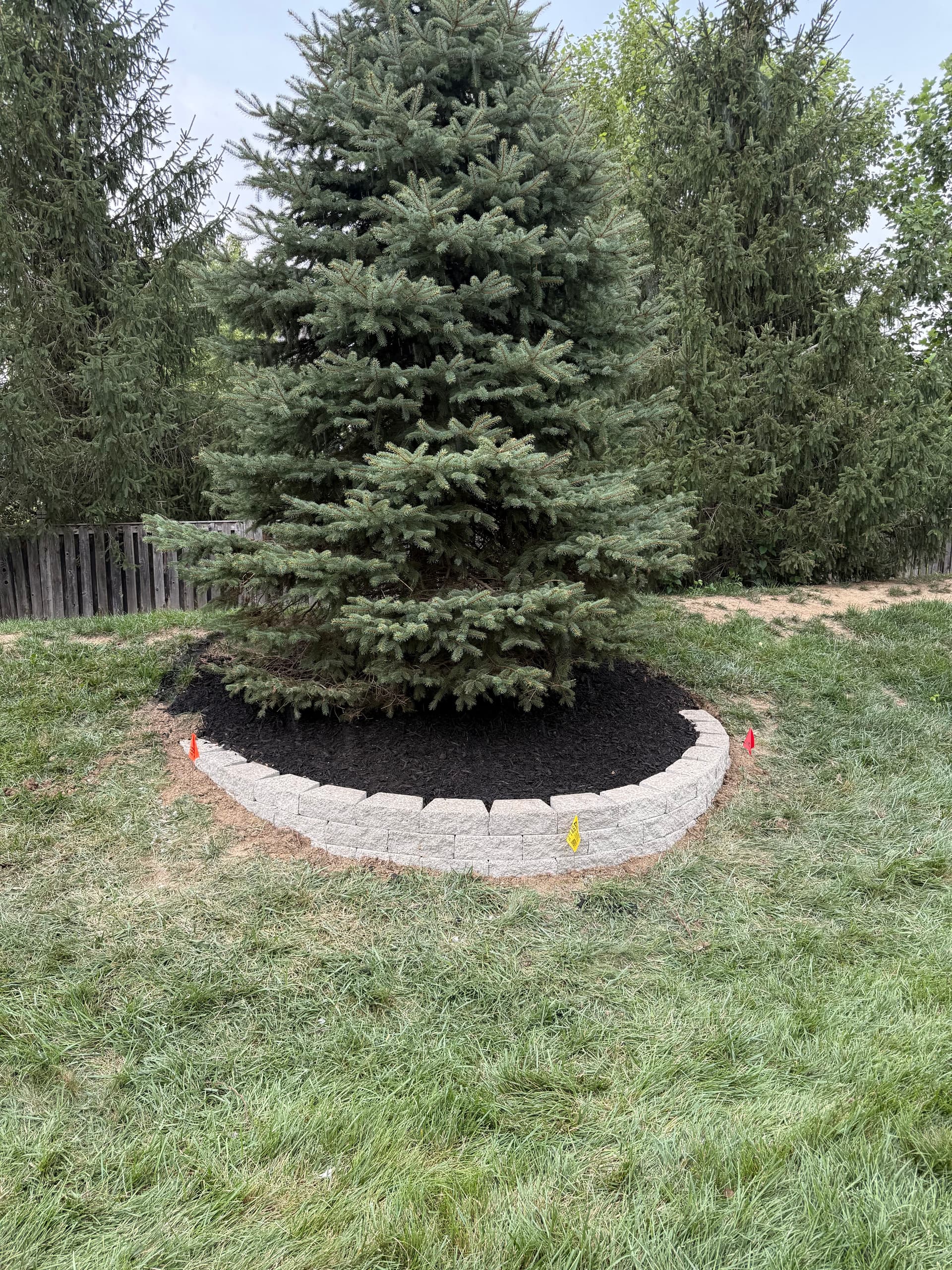
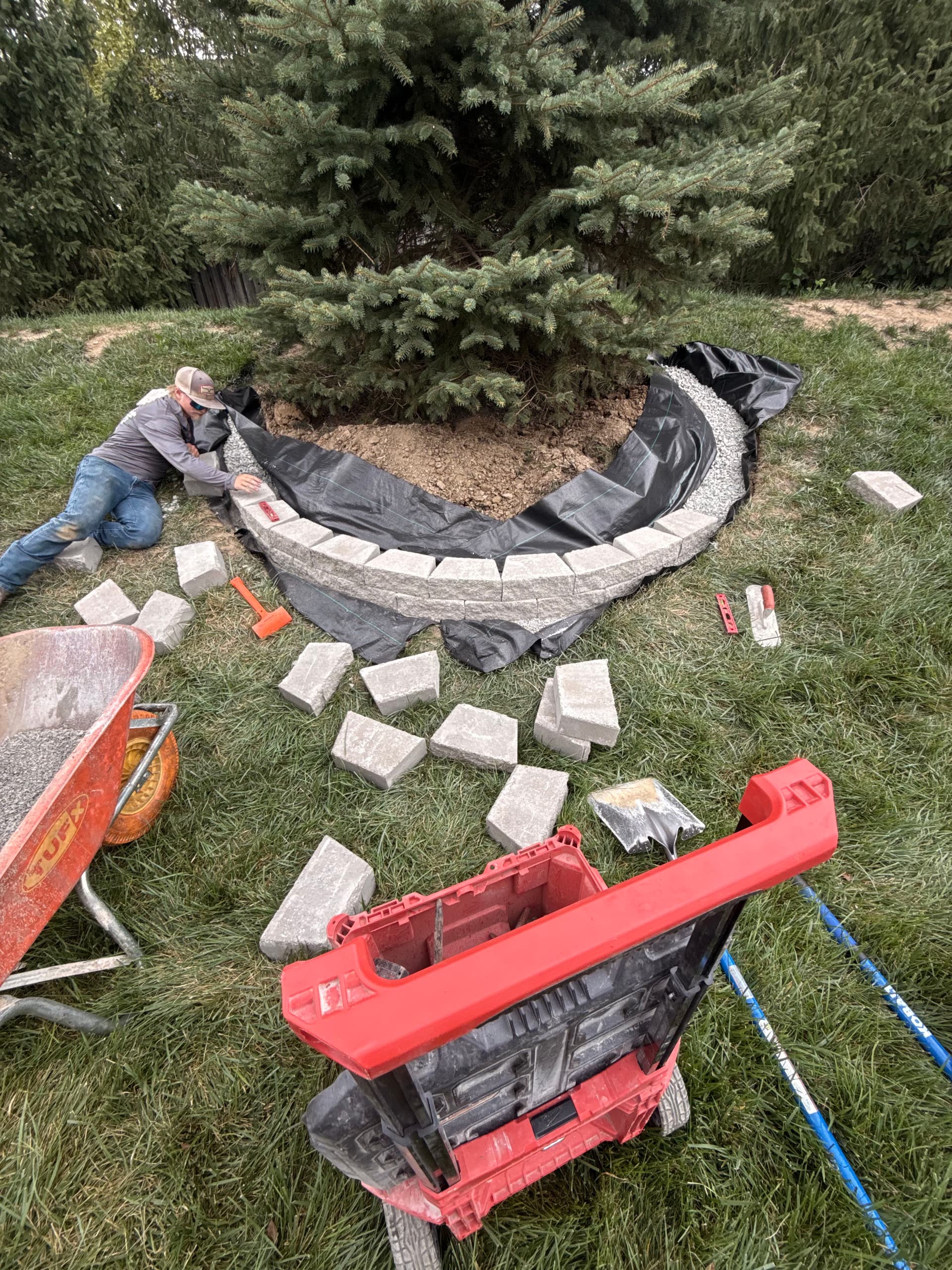
We built a curved retaining wall using stacked concrete garden blocks, carefully laid in a sweeping arc around the tree. Before setting a single block, we prepped the base properly - compacted gravel footing, landscape fabric underneath - so the wall sits level and stays that way long term. That foundation work is what separates a wall that lasts from one that shifts and settles after a few seasons.
Once the wall was set, fresh black mulch was laid inside the bed. The contrast between the light gray blocks and the dark mulch is sharp. More importantly, that mulch is going to stay put now. The wall acts as a physical barrier so rain events don't redistribute everything you just paid for.
A small wall like this does more than look good. It locks in your mulch, defines the bed edge cleanly, protects the root zone of the tree, and cuts down on the ongoing maintenance of redoing it every season. It's one of those low-cost landscape design moves that punches well above its weight.