Retaining Wall Replacement Done Right in Noblesville
Most retaining walls don't fail because of the stone. They fail because of what's behind it. Water builds up in the soil, pressure increases, and eventually the wall starts to lean, crack, or collapse. The face of the wall looks like the problem - but it's really just the symptom.
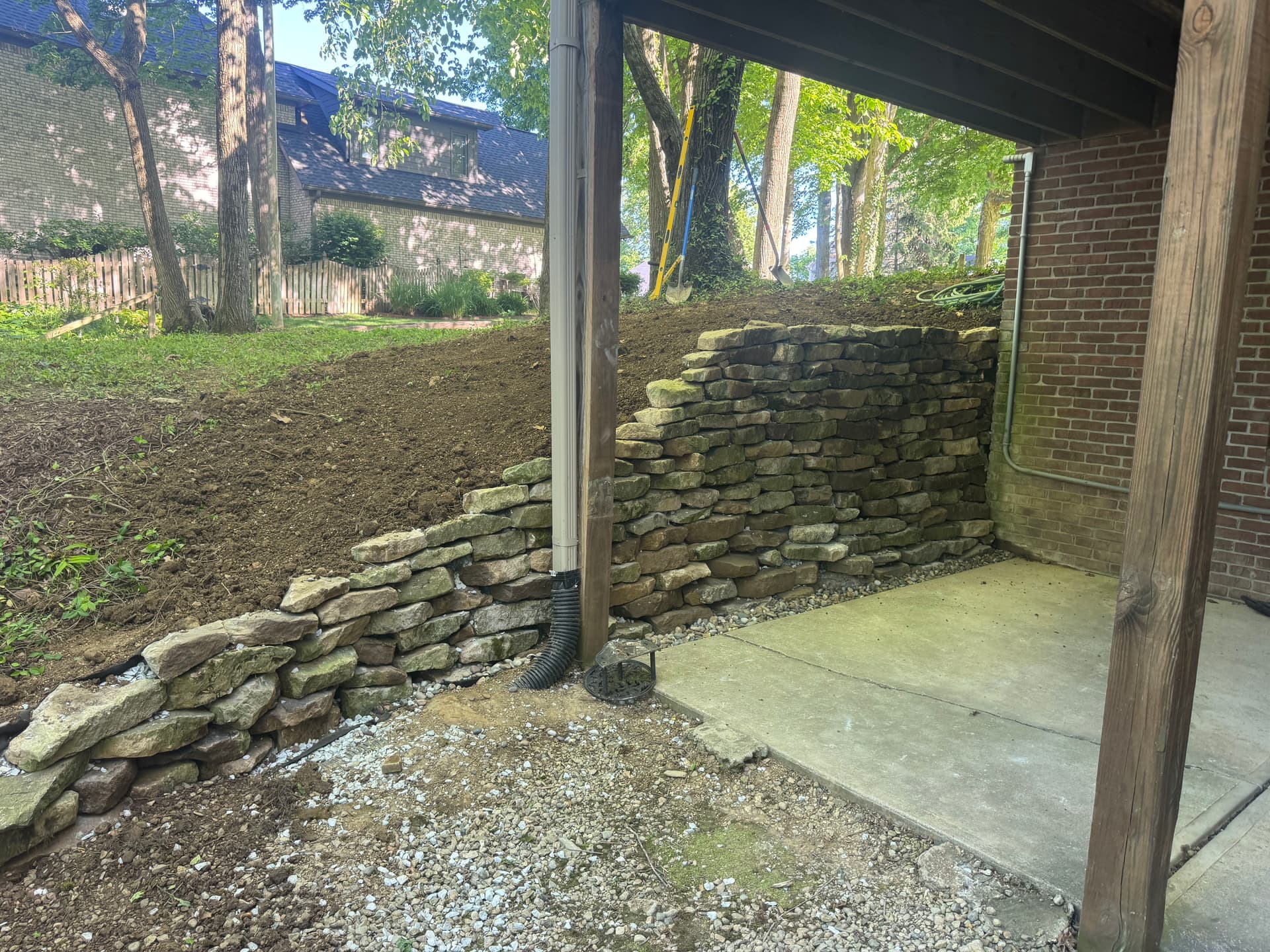
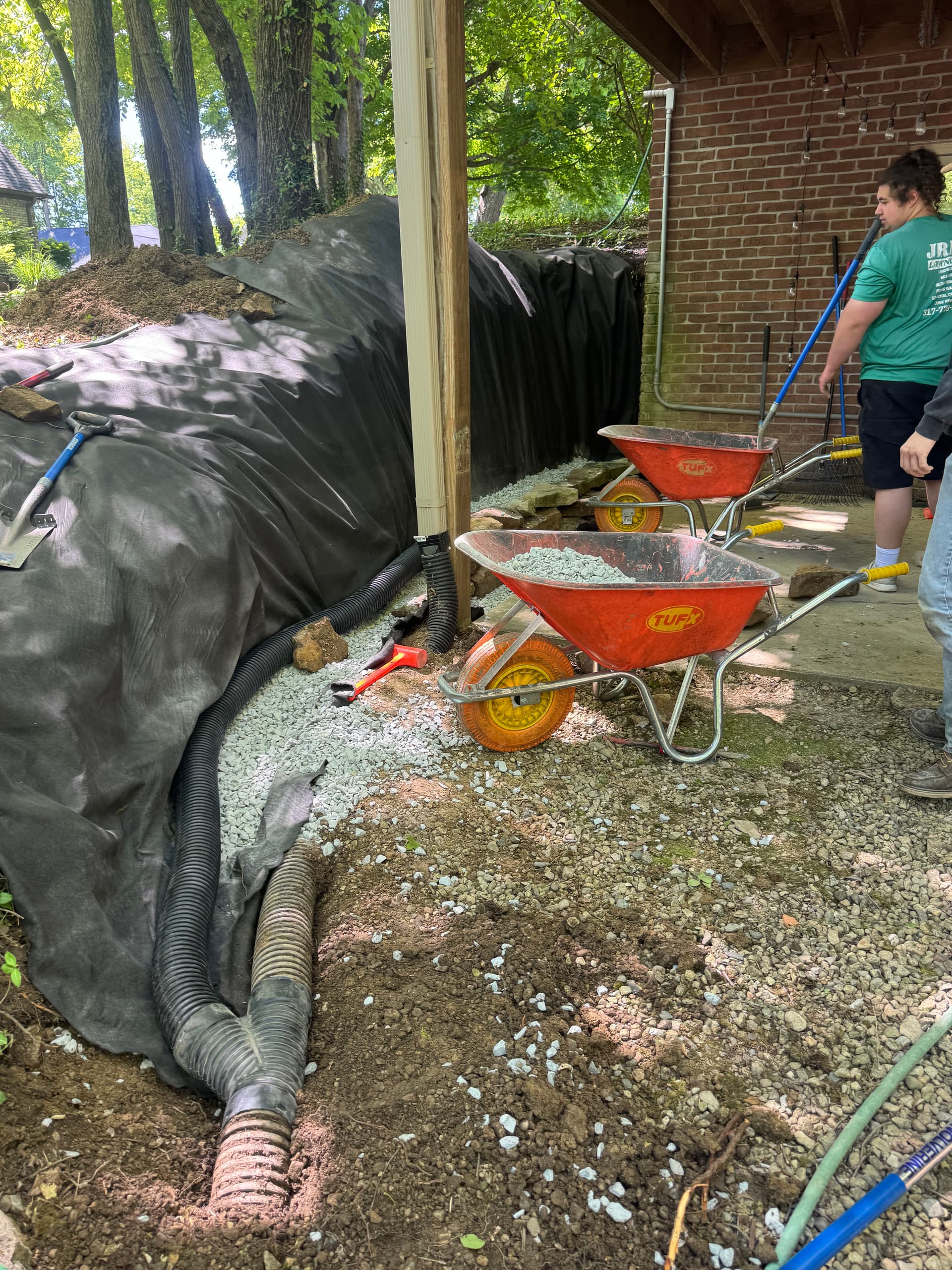
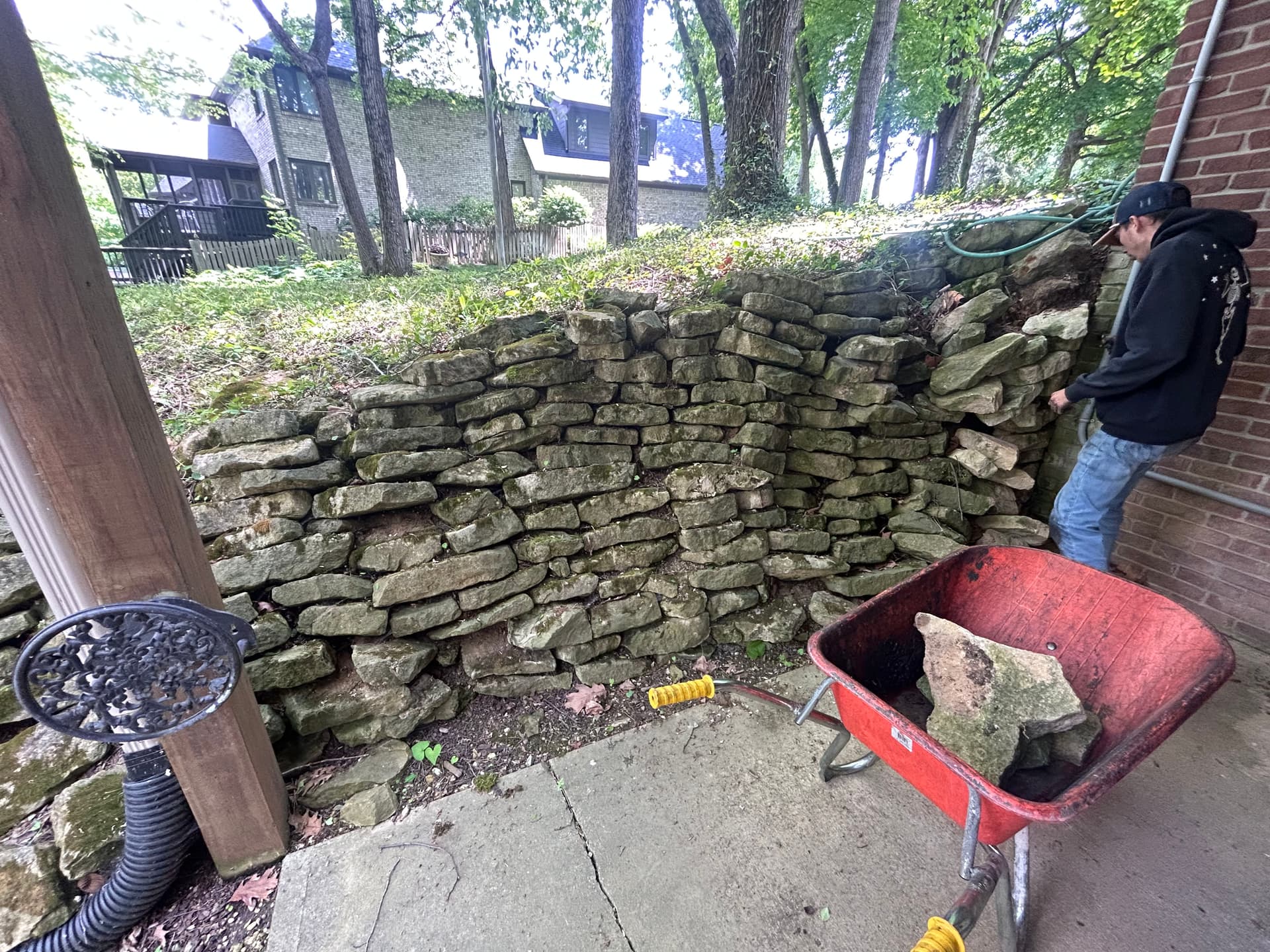
On this Noblesville job, that's exactly what we were dealing with. The existing stone wall had given out, and just stacking the stone back up would have been a waste of everyone's time and money. We tore it down, got behind it, and addressed the actual cause - poor drainage and no proper backfill material to move water away from the wall.
Here's what we did differently. We installed drainage pipe along the base and packed in a full 6 inches of #8 stone as backfill before rebuilding the wall. That crushed stone acts as a drainage layer, letting water pass through freely instead of sitting against the back of the wall and building up hydrostatic pressure. It's not a glamorous step, but it's the one that determines whether the wall lasts or fails again in a few years.
The wall itself was rebuilt using the original natural stone, reset tightly and cleanly against the slope next to the house. The finished result holds the grade back properly, handles water the way it should, and isn't going anywhere. That's the goal on every retaining wall we build - fix it once, fix it right.
Skipping the drainage step is one of the most common mistakes we see on retaining wall jobs. It might save a little time upfront, but it almost always leads to the same failure down the road. If your wall is leaning, bulging, or has already started to come apart, the drainage behind it is usually where we start looking.